back
I Started With a Camera. Somehow, I Built a Business.
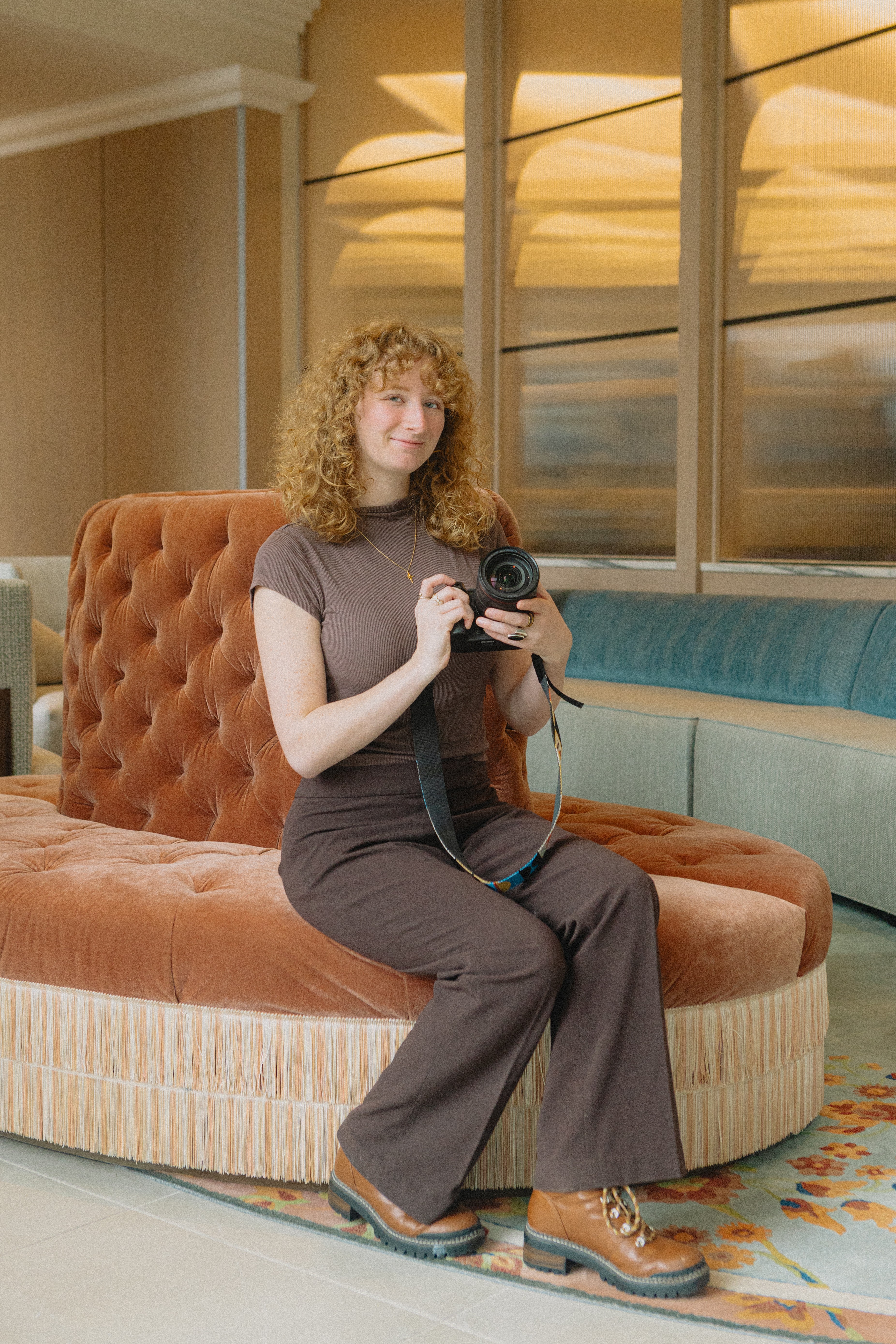
Around this time last year, I messaged about 10 photographers on Instagram with a question about location permits.
One person responded.
Two weeks after I shot at the location.
At that point, I had almost forgotten I sent the messages (which is usually when the email or DM decides to become important).
She asked if I had any other questions, so I took her up on it. One coffee and several questions later, that conversation turned into an internship. The internship turned into second shooting. Second shooting turned into lead shooting.
A year later, I am looking back at how much can happen when you ask for help, stay open to where one conversation might lead, and start treating an unexpected passion as an intentional design challenge.
Wedding photography was never on my radar. I had never photographed a wedding before, so the idea of being responsible for someone’s once-in-a-lifetime memories felt intimidating. I like knowing what to expect so I can think through every step before I take it, and I had no idea what those steps were yet.
Photography had other plans.
Lighting changes. Timelines shift. People get nervous. Family members disappear during group photos. A candid moment happens once and then it is gone (no pressure).
Assisting at weddings gave me the opportunity to learn how to prepare for all of that. I could observe how experienced photographers handled changing conditions, ask questions, and build my own process before taking the lead. Over the next few months I built my portfolio and booked my first wedding (cue internal celebration mixed with mild panic).
After photographing more than 10 weddings, the work is no longer as intimidating. I know what to look for, how to prepare, and when to adapt. The lesson was that preparation does not remove uncertainty. It gives you the confidence to work through it.
Some people bring a camera.
I bring a camera, a timeline, backup plans, and approximately 47 questions.
Designing the Experience Behind the Image
For a while, I treated photography and design like they were competing for my attention.
As my photography business grew, I started worrying that it was taking too much time away from design. I worked my day job and then I would open LinkedIn and see designers building case studies, learning new tools, and working toward the next breakthrough outside of work. Was I falling behind as a designer because I was not building an app or publishing a case study?
Then I realized I could bring design directly into my photography business.
I had designed brands and websites for other people, so it was time I gave myself the same treatment. I had previously created a 15-page brand identity workbook for a client, so I worked through that exercise for Fralick Design Co Photography and built a foundation that could grow with me.
My design philosophy has always been grounded in curiosity. I approach design as a living ecosystem, shaping experiences through bold visual thinking that feels intuitive, expressive, and unmistakably human.
Photography gave that philosophy an entirely new dimension.
My ecosystem changed, but design still existed within it. Every session is really just designing an interaction after all.
That means thinking through how people actually feel before, during, and after stepping in front of the lens. It means creating an environment where the visual storytelling feels bold and expressive, while the interaction itself stays effortless and grounded in human connection.
It turns out, you can apply the design process to photo sessions.
Discovery and research: Questionnaires and calls help me understand what clients care about, what makes them comfortable, and what story we are trying to tell. It is user research with more outfit coordination.
Ideation and concepting: I scout locations, think through lighting, build moodboards, and plan a natural flow for the session.
Prototyping and testing: Past photo sessions become prototypes for future sessions, and live shoots become real-time experimentation. If a prompt falls flat, I adjust. If the light changes, I adapt. I use body language and energy as immediate feedback so I can keep the interaction feeling natural.
Iteration and delivery: After the shoot, I refine the images, shape the final story, and create a gallery delivery experience that feels exciting and seamless.
Whether I am designing a photo session or working on a project in the corporate world, the goal is the same: understand people deeply, create with intention, and keep adapting to what the experience reveals.
The experience matters as much as the final product
I had several clients tell me they were sad to get their grad photos taken. Sad?? Why? Because they were sad to leave friends, routines, and a chapter of life that meant a lot to them.
You go to a graduation ceremony because you want the pomp and circumstance to mark the milestone of going from here to there. Graduation photoshoots are not just pretty pictures for mom's fridge. They mark the transition into the next stage of adulthood. That realization completely changed how I approached the experience.
Graduation photos are an experience to slow down and appreciate the phase of life you just made it through
I started asking:
Where were your favorite memories on campus?
What do you want these photos to say about you?
Who do you want to celebrate with?
People do not want photos in the library just because the architecture looks cool. They want to stake their claim on the all-nighters they pulled there. (I just make it look cool). I see my role as an opportunity to turn a photoshoot into an experience where they can reflect on who they became in college.
That perspective carries straight into my day-to-day work in the corporate world. In any project, you have to look past the surface request and understand the human emotion driving it. You have to pay attention to what people say, but also notice what they leave out. Sometimes a client cannot articulate what feels awkward. Sometimes a stakeholder or user cannot pinpoint why a workflow feels clunky. In both cases, curiosity is the tool that uncovers the real problem to solve.
This is where curiosity becomes a practical skill.
Photography made me a better problem solver
Every type of photography taught me something different.
Wedding photography taught me to slow down and ask for what I need with confidence, watch for candid moments, react quickly, improve my prompting, and notice the details that preserve memories.
Graduation photography taught me to think creatively, learn people’s stories, and work in every kind of lighting. Including the lighting that makes you question every decision you have ever made (camera pun intended).
My favorite middle ground between the two is capturing couples. I get to use everything I have learned to design an experience that feels more like a date night than a dreaded photoshoot they have to dress up for. Couples already have a natural dynamic, and I can lean into that to tell their story in a way that feels genuine, comfortable, and fun.
Across all of these experiences, I have learned to adapt quickly. I have learned to communicate clearly. I have learned how to make people feel comfortable enough to be themselves.
Those lessons show up in every environment, whether I am in the office collaborating across teams or running a session on location.
Plans are useful. Flexibility is necessary.
You can prepare for a project, but people will always introduce new variables. Requirements shift. Priorities change. A teammate or user reveals a need that was not visible in the initial scope.
Good work requires a process that can adapt without losing sight of the goal, paired with clear communication to keep everyone aligned.
Where Creativity Meets Structure
Photography also introduced me to the operational side of entrepreneurship.
Bookkeeping. Taxes. Inquiry forms. Deposits. Follow-ups. Timelines. Insurance. Scheduling. Buying gear. Calls. Workflows. More calls.
A lot of creatives dread this part, but I found myself energized by it. Figuring out how a business works in the real world is an incredible challenge, and digging into the operational mechanics felt weirdly natural.
That comes straight from my design background. I deliberately chose to be a designer rather than an artist, and that choice shapes everything I do with a camera.
Do not get me wrong, the artistic eye is still very much there. The lighting, composition, color grading, and editorial tone are an expression of my visual style. But while artistic vision shapes the final image, a designer’s perspective shapes everything else.
Artists create purely from their own internal world with zero rules, leaving the meaning open to interpretation. Designers do something different. We build for someone else. We start with the user, work within practical constraints, and solve real problems.
A camera can be used to make pure art, but I use it to design an end-to-end service.
My visual style is what makes the photos look distinct, but approaching the process from a designer’s point of view is what makes working with me unique. A session is never just about my creative impulses. It is about fulfilling a client’s practical goals under real constraints like budgets, tight lighting windows, event timelines, and camera-shy nerves.
Every email, intake questionnaire, calendar invite, Pinterest board, and event timeline is a touchpoint designed to remove friction. The business operations are the backstage architecture that makes the front-stage experience feel effortless.
Building those systems never felt like a chore keeping me from creative work. It became another avenue for growth and a practical way to exercise my UX muscles.
A cleaner booking process. A navigable website. A tighter timeline.
A dependable place to organize session details that are a year out to save future me from guessing (because overpreparing is still an art form in itself).
Learning how businesses operate gave my visual work a solid foundation. When you build strong systems to handle constraints, people get an experience they can genuinely trust.
Growth happens through relationships
Even with solid systems and clear processes, none of this works in a vacuum.
Networking shaped almost every part of this year.
My first wedding client already knew my work ethic from our years in industrial design classes together. They trusted my vision before I had a long photography portfolio to show them. Five years of graduation photography created a referral system that kept growing. Starting a TikTok account led to inquiries from people I would have never otherwise met.
Reaching out can feel awkward. Sometimes you send a message and hear nothing. Sometimes you send a message and wait two weeks. And sometimes you send a message that changes your entire year.
The lesson was simple but one that I had to learn again: conversations create opportunities.
Not every conversation will lead somewhere obvious. Some lead to advice. Some lead to a referral. Some lead to a new skill. Some lead to coffee and a much longer list of things you realize you still need to learn.
You guessed it. I love a growing to-do list.
What I am taking into the next year
This year reminded me that growth rarely feels comfortable while you are experiencing it.
Sometimes growth looks like waking up two hours before work to edit galleries.
Sometimes it looks like making a phone call when you would rather send an email.
Sometimes it looks like asking someone you admire if they have time for coffee.
Sometimes it looks like taking yourself seriously before you feel fully ready.
I am proud of how far I have come in one year. I am grateful for every photographer who answered a question, shared what they knew, or gave me the space to learn by doing.
The biggest takeaway I would like to leave you with:
Take yourself seriously enough to invest in your growth, but stay curious enough to keep learning.
Ask questions. Build systems.
Look for the experience behind the outcome.
Stay open to opportunities that do not look like part of the original plan.
You do not need every step mapped out before you begin. You need enough courage to take the first step, enough humility to ask for help, and enough persistence to keep adjusting as you go.
And maybe a backup battery.
Always bring a backup battery.

Hi! I'm Hannah Fralick
I blend observational and lifestyle photography to capture those authentic, in-between moments that tell your real story. I'm obsessed with light and how it can transform a moment into something timeless.
Photography, travel, and drawing aren’t just passions—they’re ways I interpret the world, notice patterns, and gather inspiration that constantly feeds back into my design work and personal growth.


terms use
privacy policy


